A driveway does more than give you a place to park. It sets the tone for the front of your home, affects day-to-day practicality, and can make a noticeable difference to kerb appeal. If you are weighing up the best driveway materials for homes, the right answer usually comes down to how you want it to look, how much maintenance you can tolerate, and how well it will cope with local weather and use.
In Aberdeen and Aberdeenshire, that last point matters. Heavy rain, frost, changing temperatures and regular vehicle traffic can expose weak installation or the wrong material choice very quickly. A good-looking finish is important, but long-term performance should be part of the decision from the start.
What matters when choosing the best driveway materials for homes
The best option is rarely the cheapest one on paper. A lower upfront cost can lead to more ongoing repairs, more maintenance, or a surface that starts looking tired sooner than expected. For most homeowners, the better question is which material offers the best balance of appearance, durability, drainage and value over time.
You will also want to think about how the driveway connects with the rest of the property. A traditional stone-built home may suit a different finish than a modern extension or newly landscaped front garden. The material should feel like part of the overall design, not an afterthought.
Practical use matters too. A driveway used by one car once a day has different demands from one that takes several vehicles, frequent turning, delivery vans or a sloping approach. That is why tailored advice is worth having before any ground is broken.
Block paving
Block paving remains one of the most popular choices, and for good reason. It gives a neat, high-quality finish and offers a lot of flexibility in colour, pattern and edging. If you want a driveway that feels designed rather than simply laid, block paving gives you plenty of scope.
It is also a strong all-round performer. Individual blocks can be lifted and replaced if a section becomes stained or damaged, which makes repairs more straightforward than with some solid surfaces. That can be a real advantage over the years, especially on family homes where driveways take regular wear.
The trade-off is that block paving needs proper installation to perform well. The sub-base, edge restraints and levels all matter. If the groundwork is poor, you can end up with movement, dips or weed growth between joints. It also benefits from occasional maintenance to keep it looking at its best.
For homeowners who want a smart, durable and versatile finish, block paving is often near the top of the list.
Resin bound surfacing
When clients want a clean, contemporary appearance, resin bound surfacing often comes into the conversation. It has a smooth finish, a modern feel and a wide choice of aggregate colours, so it can be matched well to different property styles.
One of its biggest strengths is permeability. Water can drain through the surface when it is installed correctly over a suitable base, which helps with surface water management. In areas where rainfall is a regular factor, that is more than a cosmetic benefit.
Resin bound driveways are also relatively low maintenance. They do not have loose stone shifting about, and they tend to be easy to keep tidy. That said, they are not immune to issues. Poor installation can lead to cracking, discolouration or loose patches, so quality workmanship is essential. It is also generally a more premium option than gravel or basic tarmac.
If you want a sleek finish with good drainage and minimal fuss, resin bound is a strong contender.
Tarmac
Tarmac is often overlooked by homeowners who focus mainly on decorative finishes, but it still earns its place as a practical driveway material. It is cost-effective, durable and well suited to larger driveways where budget and function are both important.
A well-laid tarmac driveway can cope with regular traffic and gives a clean, understated appearance. It can also be improved visually with brick or stone edging, helping it feel more considered and in keeping with the property.
Its main drawback is appearance. On its own, tarmac usually does not deliver the same premium feel as block paving or resin. Over time, it can also soften in high heat or show wear in heavily used areas. Even so, for many homes, especially where space is generous and use is frequent, it offers solid value.
Gravel
Gravel has long been a popular option for rural and traditional properties. It is usually one of the more affordable driveway materials, and it gives a natural look that can work very well in the right setting.
It also drains well, which is useful in wet conditions. For homes with a larger frontage, gravel can be an attractive way to cover more area without the higher cost of premium hard surfacing.
There are compromises, though. Gravel moves underfoot and under tyres, so it needs topping up and raking from time to time. It can spread into borders or onto paths, and it is less convenient for pushchairs, bicycles and wheelie bins. On a slope, it can become more of a nuisance.
Gravel can look excellent, but it suits some lifestyles better than others. If low maintenance and a crisp, formal finish are high priorities, another material may be a better fit.
Concrete
Concrete is a dependable option that can provide a durable surface at a reasonable cost. It works well where function is the main driver and can be finished in different ways, including brushed or patterned finishes, to improve its appearance.
Its strength is durability, especially when installed on a properly prepared base. It can cope well with vehicles and regular use, and it does not shift like gravel or require joint maintenance like block paving.
The limitation is that repairs are rarely invisible. If concrete cracks or stains badly, patching can be obvious. Decorative concrete can improve the look, but it may still feel less refined than other options for some homes. It is a sensible choice, but not always the most characterful one.
Natural stone
For homeowners looking for a premium finish, natural stone stands out. It brings character, texture and a timeless quality that few manufactured materials can match. On the right property, it can elevate the entire front exterior.
Stone is especially effective when the driveway is part of a wider landscaping project that includes paths, patios or boundary features. It helps create a cohesive finish and can add genuine value in visual terms.
The obvious consideration is cost. Natural stone is usually one of the more expensive choices, both in materials and installation. It also needs skilled laying to get the result right. For homeowners focused on long-term appearance and craftsmanship, it can be worth the investment, but it is not the default option for every budget.
Which driveway material is best for your home?
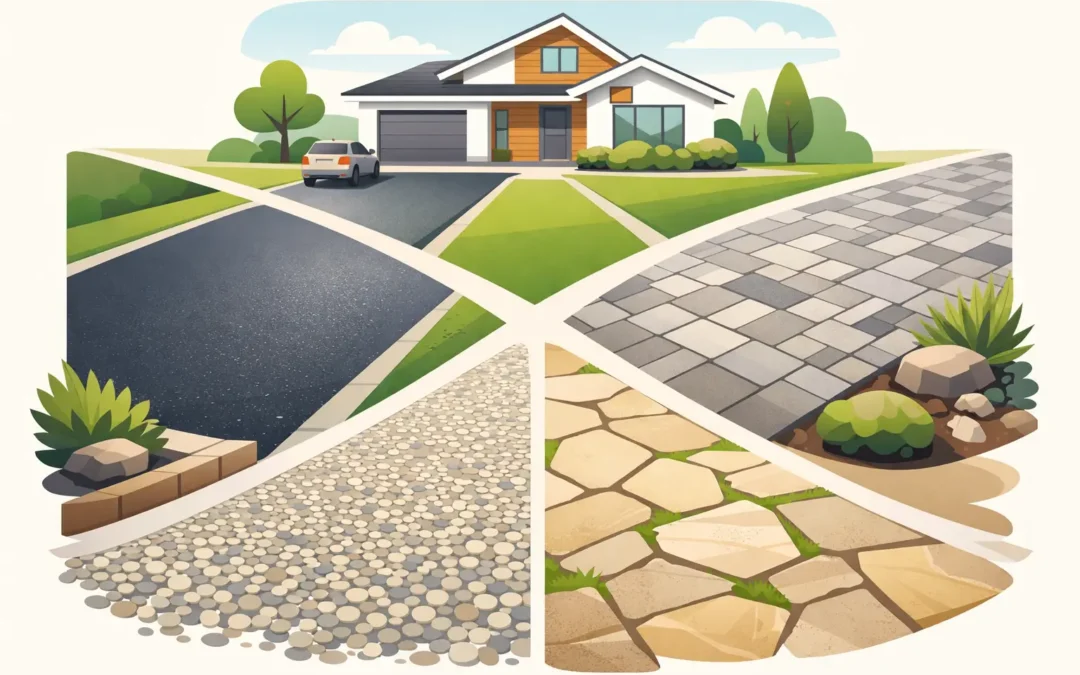
When comparing the best driveway materials for homes, there is no single winner for every property. Block paving is often the best all-rounder for appearance, flexibility and repairability. Resin bound is ideal for a modern, low-maintenance finish with good drainage. Tarmac offers practicality and value, while gravel suits rural settings and larger spaces. Concrete does the job well where function leads, and natural stone is the premium choice for standout character.
The best decision usually comes from looking at the full picture. Consider your budget, how many vehicles use the space, whether drainage is an issue, and how much upkeep you want to take on. It also helps to think beyond the driveway itself. The right material should complement the house, the garden and any future external improvements.
A professionally built driveway is not just about the top layer. Excavation, base preparation, edging, drainage and finishing all play a major part in how well it performs. Even the best material will disappoint if the groundwork is rushed.
That is why many homeowners prefer a contractor who can look at the wider property and recommend a solution that fits both the house and the way the space is used. At AGM Construction, that practical, workmanship-led approach is central to delivering outdoor upgrades that look right and last.
If you are planning a new driveway, the smartest starting point is not choosing a material from a brochure. It is looking at how you want your home to function and feel every time you pull onto the drive.