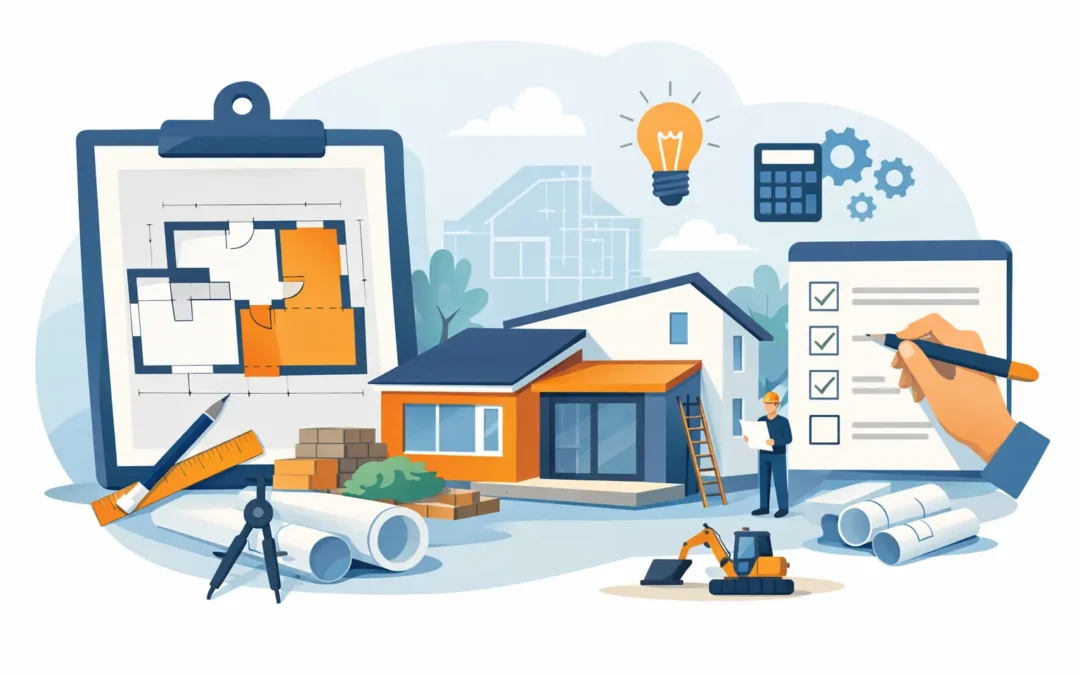
Most house extensions start with a simple thought – we need more space. The difficult part is working out how to plan a house extension in a way that improves daily life, suits the property, and stays on budget. A good extension is not just extra square metres. It should feel like it always belonged there, work hard for your household, and be built to a standard that adds long-term value.
If you rush the early decisions, the project often becomes more expensive and more stressful than it needs to be. If you plan it properly from the outset, you give yourself a far better chance of a smooth build, a better finish, and a space that genuinely transforms how you use your home.
How to plan a house extension with the right starting point
Before looking at drawings or finishes, get clear on what problem the extension needs to solve. For some households, that means creating a larger kitchen and dining area that works better for family life. For others, it may be an extra bedroom, a home office, a utility space, or a more accessible ground-floor layout.
The more specific you are, the better your design decisions will be. Saying you want a bigger house is too broad. Saying you want an open-plan kitchen with enough storage, better garden access, and space for six to eat comfortably gives the project direction.
This is also the stage to think about how long you plan to stay in the property. If the extension is for your long-term home, your priorities may be comfort, layout, and finish quality. If resale value matters more, the emphasis may shift towards practical square footage, kerb appeal, and changes that suit the local market.
Set a realistic budget from the beginning
Budget is often where extension plans either become clear or come unstuck. It helps to think in terms of total project cost rather than just the build itself. The headline construction figure is only part of the picture. Design work, permissions, structural input, internal finishes, heating, electrics, flooring, decoration, landscaping, and contingencies all affect the final number.
A sensible budget should also leave room for the unexpected. Once work begins, hidden issues can appear, particularly in older properties. Drainage changes, structural surprises, or the need to upgrade existing elements can all add cost. Planning for that early is far better than being forced into rushed compromises later.
There is always a balance to strike. A cheaper route at the start can sometimes mean more disruption, weaker detailing, or a finish that does not do the rest of the home justice. Equally, not every project needs premium materials in every area. Good planning is about spending where it matters most for function, durability, and overall appearance.
Choose the right type of extension
The best extension is not always the biggest one. A rear extension can work brilliantly for opening up a cramped kitchen and improving the connection to the garden. A side return may be enough to transform a narrow ground floor. A wraparound extension can offer major layout improvements, but it needs careful design to avoid creating dark internal areas. Double-storey extensions often provide better value per square metre, though they usually bring more structural complexity and stricter planning considerations.
The right choice depends on your plot, your existing layout, and the way you want to live in the space. It also depends on what the house can carry visually. An extension should complement the original building rather than fight against it.
Think carefully about design, light and flow
This is where many extensions succeed or fail. A well-built extension can still disappoint if the layout feels awkward or the natural light has not been considered properly. Good design is about more than appearance. It is about movement through the home, sightlines, storage, ceiling heights, glazing, and how each part of the room will actually be used.
A larger footprint does not automatically mean a better room. In some cases, too much open-plan space can feel exposed or impractical. Families often still need zones for cooking, dining, working, and relaxing, even within one larger area. Thinking through furniture placement early helps avoid ending up with a lovely room on paper that is difficult to live in.
Natural light matters just as much as floor area. Rooflights, larger openings, and carefully placed doors can all improve the feel of the extension, but glazing needs to be balanced with privacy, heat control, and wall space. What works for one house may not suit another.
Understand permissions before work starts
One of the most important parts of how to plan a house extension is checking what approvals you need before committing too far. Some extensions may fall under permitted development, while others will need full planning permission. Building regulations approval is a separate matter and applies to structural work, insulation, fire safety, drainage, and other key elements.
If your property is in a conservation area, listed, or affected by local planning constraints, the process can be more involved. This is why early advice is valuable. It can save time, prevent redesigns, and help you avoid investing in a scheme that is unlikely to be approved.
It is also worth checking for practical legal matters such as party wall considerations, access requirements, and any title restrictions. These are not the most exciting parts of the project, but overlooking them can cause delays.
Choose a contractor who can see the whole project
An extension is rarely just an extension. It often involves alterations to the existing house, internal reconfiguration, electrical and plumbing work, joinery, plastering, decoration, and external finishing. That is why many homeowners prefer a contractor who can manage the project from design discussions through to the completed finish.
When speaking to builders, look beyond price alone. Ask how they approach planning, communication, site management, programme scheduling, and finish quality. A tidy, well-run site and clear updates make a real difference when work is happening around your home.
Experience matters too. A contractor used to extension work will understand the practical challenges of tying new and existing structures together, protecting occupied homes, and delivering a result that feels cohesive rather than obviously added on. That joined-up approach is one reason homeowners across Aberdeen and Aberdeenshire often look for a team like AGM Construction that can manage the full process with care and consistency.
Plan the build around your household
Living through an extension can be manageable, but only if expectations are realistic. Think about how the work will affect cooking, washing, access, noise, storage, and day-to-day routines. In some cases, staying in the property is straightforward. In others, especially where the main kitchen is being removed or major structural openings are being formed, temporary arrangements may be needed.
This is another area where honest conversations early on are useful. A good build plan should not only cover what is being constructed, but how the work will be phased and how disruption will be handled.
Do not leave the finishing details until last
Finishes have a major impact on cost, programme, and the overall result. Flooring, doors, ironmongery, lighting, sockets, skirting, storage, worktops, paint colours, and external materials all need decisions. Leaving them too late can slow progress or lead to choices that feel rushed.
It also helps to think about continuity between old and new parts of the house. Sometimes contrast works well. Other times, a more seamless look is the goal. There is no single right answer, but the decision should be deliberate.
The same applies outside. Drainage, paths, patios, steps, boundary works, and garden levels should form part of the extension plan rather than becoming an afterthought once the main structure is complete.
Keep value in mind, but make it work for you
Most homeowners want an extension to add value, and a well-designed, well-built project usually does. Still, value should not be judged by square footage alone. A carefully planned extension that improves layout, energy efficiency, storage, and natural light can have a bigger impact than a larger but less considered addition.
There is also a point where overbuilding for the area may limit return on investment. That does not mean you should always design to the lowest common denominator. It simply means the smartest projects tend to balance personal needs with market reality.
The strongest extension projects are the ones that solve the right problem, are designed with care, and are built to a finish you can be proud of. If you give proper attention to budget, permissions, design, and the team delivering the work, you will be in a far better position to create extra space that feels natural, practical, and built to last.