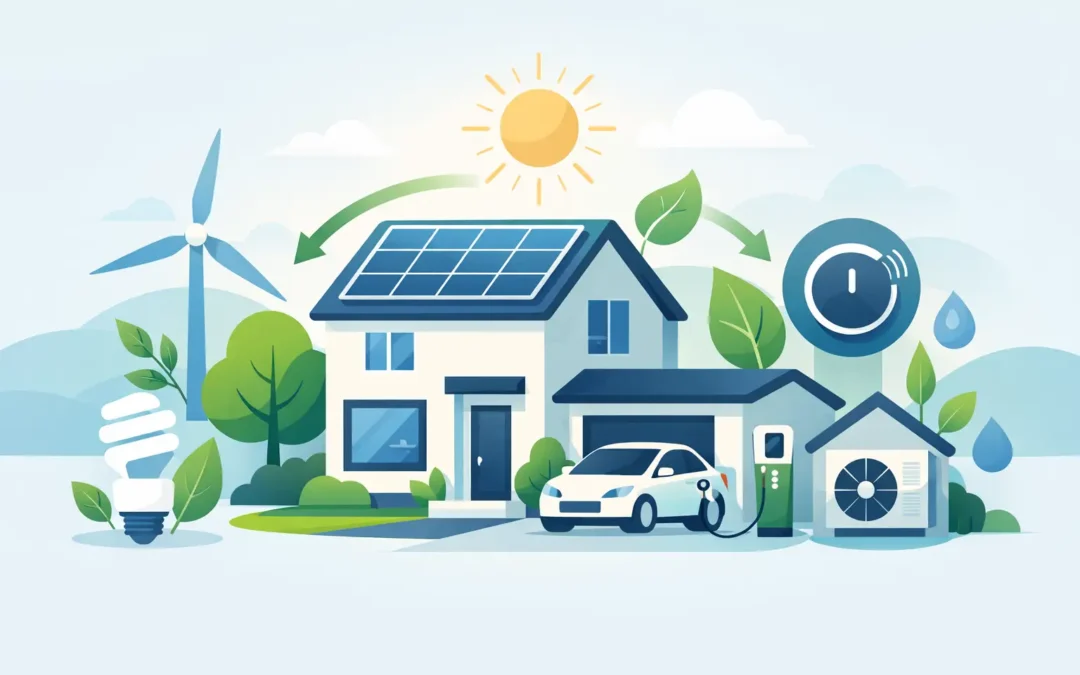
If your home feels chilly in winter, too warm in summer, or expensive to run all year round, the problem is rarely just the boiler. In many Aberdeen and Aberdeenshire homes, heat escapes through several weak points at once – the roof, walls, windows, floors, and even small gaps around doors. When people ask how to make your home more energy efficient, the best answer is to look at the property as a whole rather than chasing one quick fix.
That matters because the right improvements do more than trim monthly bills. A more efficient home is more comfortable to live in, easier to heat, and often more attractive to future buyers. The key is choosing upgrades that suit the age, layout, and condition of your property.
How to make your home more energy efficient in the right order
One of the most common mistakes is spending money in the wrong place first. A new heating system can help, but if your home is still losing heat quickly, you are paying to warm the outside. In most cases, the best starting point is the building fabric – the parts of the house that hold heat in.
Loft insulation is often one of the simplest and most cost-effective upgrades. Warm air rises, so an under-insulated loft can waste a surprising amount of energy. If your loft insulation is old, thin, or patchy, topping it up can make a noticeable difference without major disruption.
Wall insulation can be just as important, although the right approach depends on the type of property. Some homes suit cavity wall insulation, while older properties may need a different solution. With traditional buildings especially, it is worth getting proper advice. The wrong materials can create moisture issues, so energy efficiency should never come at the expense of the building’s health.
Floor insulation is often overlooked, particularly in older houses with suspended timber floors. If rooms feel draughty underfoot, heat loss through the floor may be part of the problem. This upgrade is not always the first job to tackle, but it can add a real lift in comfort.
Windows, doors and draught-proofing
Homeowners often focus on windows first because they are visible, but it depends on what condition the existing ones are in. If your windows are old, poorly fitted, or have failed seals, replacing them can improve comfort and reduce draughts. Good-quality double or triple glazing can also help with noise as well as heat retention.
That said, full window replacement is a larger investment than basic draught-proofing, and it is not always the most urgent step. Sealing gaps around doors, windows, loft hatches, skirting boards, and pipe penetrations can be a straightforward way to improve efficiency quickly. Small openings may not look serious, but together they can let a lot of warm air out and cold air in.
External doors are another weak point. A well-fitted, insulated door makes a difference, especially in exposed locations where wind drives through every slight gap. In the north-east of Scotland, that can have a bigger impact than people expect.
Heating systems still matter
Once the home is better sealed and insulated, your heating system can work more effectively. If your boiler is ageing, inefficient, or unreliable, replacing it with a modern system may lower running costs and improve control. Heating controls are often just as important as the boiler itself. A quality thermostat, zoned heating, and smart controls allow you to heat the rooms you use, when you use them, rather than warming the whole property unnecessarily.
Radiators should also be looked at as part of the bigger picture. In some refurbishments, older radiators are undersized for the space or badly positioned. Upgrading them can improve heat distribution and reduce the temptation to keep turning the temperature up.
There is no single answer for every property. In some homes, a boiler upgrade makes strong financial sense. In others, insulation and air-tightness improvements will deliver better results first. The right order always depends on what is already in place.
Don’t ignore ventilation
A more airtight home should still breathe properly. This is where balance matters. If you block every draft but do nothing about ventilation, you can create condensation and stale air, particularly in kitchens, bathrooms, and utility rooms.
Extractor fans, trickle vents, and properly planned ventilation upgrades help manage moisture without wasting unnecessary heat. This is especially important during renovations, where multiple improvements are being made at the same time. Good workmanship is not just about fitting materials neatly. It is about making sure the whole house performs properly once the job is done.
Lighting, appliances and everyday energy use
Not every energy-saving improvement involves building work, but the most effective homes usually combine both. Swapping older bulbs for LED lighting is a small change that delivers steady savings over time. It is simple, affordable, and worth doing throughout the house.
Appliances matter too. If you are already planning a kitchen refurbishment or utility room upgrade, it makes sense to choose energy-efficient appliances as part of the project. Refrigeration, washing machines, tumble dryers, and ovens all contribute to your running costs, so replacement at the right time can improve efficiency without creating extra disruption.
Hot water use is another area worth attention. Insulating hot water pipes and cylinders, fitting water-efficient fixtures, and checking how your system is set up can all reduce wasted energy. These are not always headline-grabbing improvements, but they support the bigger gains made elsewhere.
Renewable options and when they make sense
Many homeowners ask about solar panels, heat pumps, and other low-carbon technologies. These can be excellent additions, but they work best when the property is ready for them. If a house is poorly insulated, installing advanced technology first may not give you the return or comfort you expect.
For example, heat pumps generally perform better in homes with strong insulation, good air-tightness, and suitable heat emitters. Solar panels can help reduce electricity costs, but roof orientation, shading, and household energy use all affect the value they deliver. These are worthwhile options, but they should be assessed as part of an overall upgrade plan rather than treated as automatic solutions.
Renovation is the best time to improve efficiency
If you are already planning an extension, refurbishment, garage conversion, or major internal upgrade, that is often the ideal time to improve energy performance. Work can be coordinated properly, finishes can be integrated neatly, and you avoid repeating disruption later.
This is where a joined-up contractor adds real value. Instead of treating insulation, heating, joinery, windows, and internal finishes as separate problems, the project can be managed as one improvement. That usually leads to a better result both visually and practically.
For homeowners in Aberdeen and Aberdeenshire, this can be particularly valuable with older housing stock, where no two properties are quite the same. A tailored approach tends to outperform a one-size-fits-all list of upgrades. AGM Construction often works with clients who want improvements that feel considered from start to finish, not patched together over several years.
How to decide what is worth doing first
If you are unsure where to start, begin with the issues you can feel or see. Cold rooms, draughts, condensation, uneven heating, and high energy bills all point to areas worth investigating. It can help to think in terms of priorities rather than products.
First, stop unnecessary heat loss. Then improve heating efficiency. After that, consider longer-term upgrades such as windows, renewables, or larger refurbishments. This order usually gives better value than jumping straight to the most expensive option.
Budget matters as well. Some homeowners want a phased plan they can carry out over time, while others prefer to combine improvements into one larger project. Neither approach is wrong. What matters is making sure each step supports the next rather than creating extra cost later.
A good contractor should be honest about trade-offs. Triple glazing, for example, is not always essential if the rest of the property still needs work. Underfloor heating can be an excellent choice in some renovations, but not every room or build-up allows for it. Proper advice is practical, not sales-driven.
The best energy-efficient homes are not always the ones packed with the most technology. They are the ones where the basics have been done properly – insulation, air-tightness, ventilation, heating control, and quality installation throughout. Get those elements right, and your home will not just cost less to run. It will feel better to live in every day.