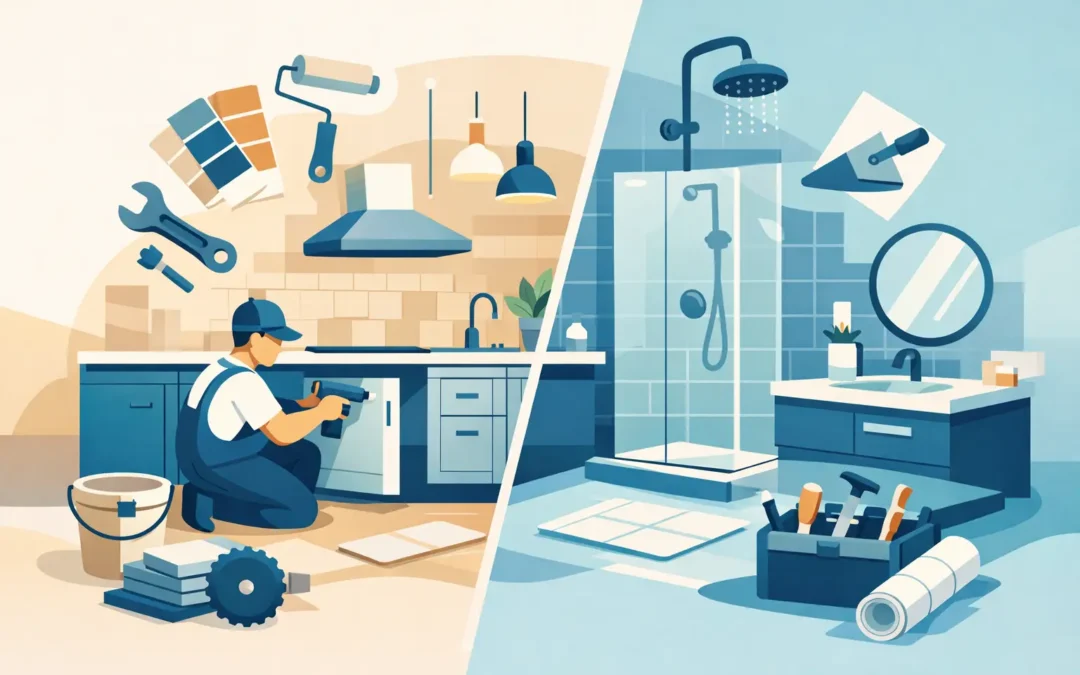
A tired kitchen shows itself quickly – worn doors, poor storage, dated worktops and lighting that never quite suits the room. Bathrooms are much the same. Cracked tiles, awkward layouts and ageing fittings can make everyday routines feel harder than they should. A well-planned kitchen and bathroom refurbishment is not just about replacing old finishes. It is about improving how your home works, how it feels to live in, and how confidently you can invest in it.
These are two of the hardest-working spaces in any property, so the standard of planning and workmanship matters. Get it right and you gain better use of space, stronger long-term value and a finish that still looks right years later. Rush it, and even expensive materials can feel like a missed opportunity.
Why kitchen and bathroom refurbishment deserves proper planning
Kitchens and bathrooms bring together more trades than many homeowners expect. Joinery, plumbing, electrics, tiling, plastering, flooring, decoration and ventilation all need to line up properly. In some homes, structural alterations may also be part of the job, especially where clients want a larger kitchen layout or a bathroom reconfigured to suit modern family life.
That is why early decisions matter. It helps to be clear about what is not working now. In a kitchen, that may be a lack of preparation space, poor storage, or a layout that creates constant traffic around cooking areas. In a bathroom, the issue may be weak water pressure, poor ventilation, limited storage or fittings that no longer suit the people using the room.
A refurbishment should solve practical problems first and improve appearance second. The best projects do both, but function needs to lead the design.
What to decide before the work starts
Budget is the obvious starting point, but scope is just as important. Some clients want a straightforward upgrade with replacement units, sanitaryware and finishes in the existing layout. Others want more substantial changes, such as moving plumbing points, building bespoke storage, opening up space or upgrading insulation and lighting at the same time.
Neither approach is automatically better. It depends on the condition of the room, the age of the property and your long-term plans. If you expect to stay in the home for many years, it often makes sense to invest in the layout and build quality rather than only surface finishes. If the aim is to improve a property before sale or let, the priority may be durability, clean design and broad appeal.
It also pays to think about disruption. A kitchen refurbishment can affect daily routines more than almost any other internal project. Bathroom work can be equally disruptive if it is the only one in the house. A realistic programme, clear sequencing and honest communication make a major difference here.
Kitchen and bathroom refurbishment: where value really comes from
Many people focus first on visible items such as doors, taps, tiles and worktops. Those choices matter, but lasting value often comes from what sits behind them.
In kitchens, good cabinet design, sensible appliance placement and strong installation standards are what make the room feel easy to use. A beautifully finished kitchen with poor storage or awkward circulation will lose its appeal quickly. Deep drawers, well-planned corner solutions, task lighting and durable surfaces often improve day-to-day use more than decorative upgrades alone.
In bathrooms, waterproofing, extraction and quality fitting are essential. A smart bathroom can be let down by condensation issues, poor drainage falls or weak detailing around baths, showers and basins. These are not glamorous parts of the project, but they protect the room and the property around it.
This is where an experienced contractor earns their place. Coordinating trades, spotting practical issues early and keeping finish quality consistent across the job is what turns a refurbishment from a collection of products into a properly finished space.
Choosing the right layout for your home
Layout decisions should reflect the way the room is used, not just what looks good in a brochure. A family kitchen may need generous storage, durable surfaces and enough room for several people to move through it at once. A couple renovating a period property may prioritise character, bespoke joinery and a calmer, more tailored feel.
Bathrooms are equally personal. A busy household may benefit more from a walk-in shower, better storage and easy-clean finishes than from a freestanding bath that sees little use. In another home, a larger bath and more considered lighting may be exactly the right investment.
There are always trade-offs. Open shelving can look attractive but requires discipline. Large-format tiles can create a clean modern finish but may not suit every room size or every wall condition. Bespoke joinery offers excellent fit and flexibility, but it is usually a higher investment than off-the-shelf options. Good advice should help you weigh these decisions against your budget and priorities, not push you towards features you do not need.
Materials, finishes and what stands up over time
Refurbishment choices should balance appearance, maintenance and durability. In kitchens, worktops need to suit the way you cook and clean. Some clients want the natural look of stone, while others prefer surfaces that are easier to maintain and more forgiving in a busy household. Cabinet finishes also vary in how well they handle knocks, moisture and daily wear.
For bathrooms, slip resistance, grout quality and moisture performance deserve real attention. A polished tile may look impressive, but if it creates practical issues underfoot, it may not be the best fit. Likewise, premium brassware can lift the look of the room, but only if the installation and water system support it properly.
Lighting is often underestimated in both spaces. In kitchens, you need a mix of general, task and feature lighting to avoid dark work areas and flat-looking finishes. In bathrooms, lighting should be functional but flattering, with proper consideration for mirrors, shaving, make-up and evening use.
Why one-contractor delivery makes a difference
For many homeowners across Aberdeen and Aberdeenshire, the biggest concern is not choosing tiles or handles. It is whether the project will be well managed from start to finish.
That is where a full-service approach has real value. When one contractor takes responsibility for planning, scheduling and coordinating the different trades, the process is usually cleaner and more straightforward. There is less room for mixed messages, fewer gaps between stages and a better chance of maintaining quality from first fix to final finish.
This matters particularly in kitchen and bathroom projects, where small delays can have a knock-on effect. If joinery, plumbing or tiling falls out of sequence, the programme can slow quickly. A contractor with broad in-house capability and clear communication can keep the project moving and give clients confidence throughout.
Getting the finish right
A strong refurbishment is often judged on details. Tile lines should be consistent. Silicone work should be neat. Cabinet doors should align properly. Flooring transitions should look intentional, not improvised. Paint finishes should be crisp, and all those practical points that clients may not name directly should simply feel right when they walk into the room.
Cleanliness and care on site matter too. When work is taking place in lived-in homes, professionalism is not only about the final handover. It is about how the job is run each day, how disruption is managed and how clearly the client is kept informed.
That standard of finish is what gives a refurbishment staying power. Trends change. Good workmanship does not.
When is the right time to refurbish?
Usually, the right time is when the room is no longer serving your needs and patch repairs are starting to feel like false economy. If you are already dealing with failing units, dated fittings, poor storage or ongoing moisture issues, a planned refurbishment is often more sensible than repeated small fixes.
It can also be the right move when other improvements are being considered. If you are extending, reconfiguring the ground floor or upgrading a property more broadly, it makes sense to consider kitchens and bathrooms as part of the same investment. Joining up these decisions often leads to a better overall result.
At AGM Construction, projects are approached with that wider view in mind – combining practical build knowledge, finish quality and clear communication to bring your vision to life in a way that works for the property as a whole.
If you are thinking about upgrading your kitchen, bathroom or both, start with the way you want the space to function day after day. The finishes matter, of course, but the real success of a refurbishment is in how naturally your home works once the job is done.