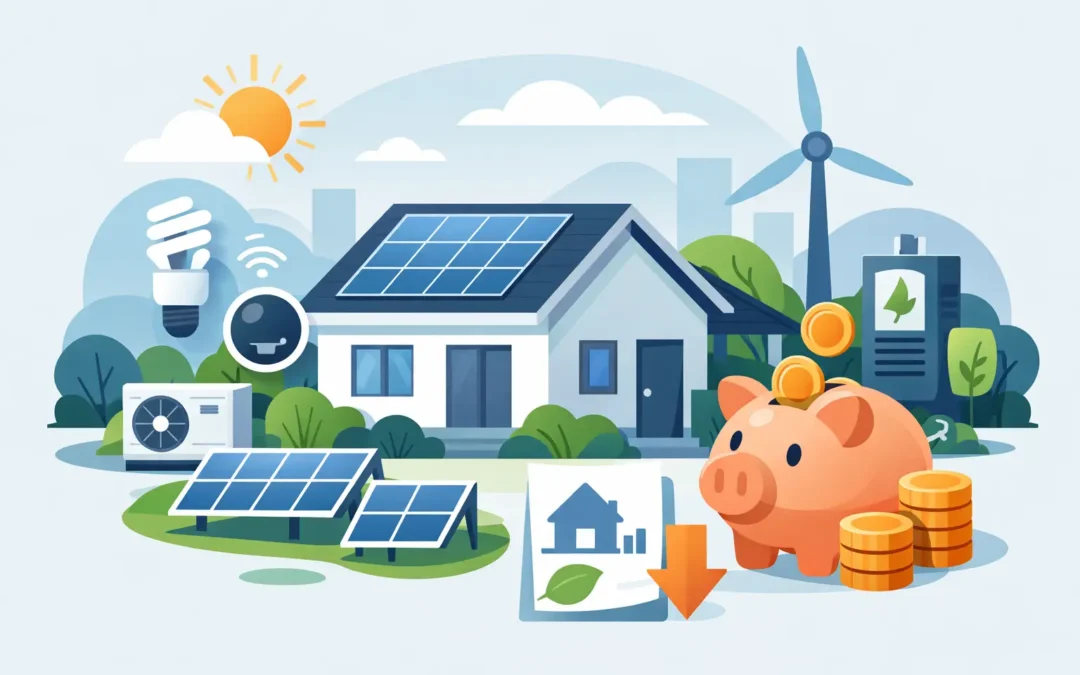
If your heating bills feel high but your home still has cold spots, draughts or rooms that never quite warm up, the answer is rarely a single quick fix. The most cost effective home energy improvements are usually the ones that reduce heat loss first, then make your heating system work more efficiently. For homeowners across Aberdeen and Aberdeenshire, that means focusing on practical upgrades that suit the age, layout and condition of the property rather than chasing trends.
What makes an energy improvement cost effective?
Cost effective does not always mean cheapest. A low-cost measure that makes very little difference can be poor value, while a larger upgrade that cuts bills for years and improves comfort every day can be a far better investment.
In practical terms, the best-value improvements tend to do one or more of three things. They stop heat escaping, they help your home hold a more stable temperature, and they reduce the amount of energy needed to heat the space in the first place. The strongest results usually come when these are planned together.
There is also an important trade-off to keep in mind. Some improvements offer very fast payback but modest overall impact, while others cost more upfront and make a much bigger difference to how the house feels. If you are planning wider renovation work, timing matters as much as the measure itself.
The most cost effective home energy improvements to consider first
Loft insulation
If a property is under-insulated at loft level, this is often one of the best places to start. Heat rises, and a poorly insulated loft allows a steady loss of warmth through the roof. Topping up insulation is generally less disruptive than major wall work and can deliver a noticeable improvement in heat retention.
The key is to check what is already there rather than assuming it is adequate. Older homes often have some insulation, but not enough to modern standards. It is also worth making sure the work is carried out neatly around hatches, pipework and ventilation points so performance is not undermined by gaps or condensation issues.
Draught proofing
Draught proofing is not glamorous, but it is often excellent value. Small gaps around doors, windows, floorboards, loft hatches and service penetrations can make a room feel colder than the thermostat suggests. That leads many households to turn the heating up when the bigger problem is uncontrolled air leakage.
Done properly, draught proofing improves comfort quickly and helps your heating work more effectively. The important word here is properly. Older properties in particular still need appropriate ventilation, so sealing every gap without understanding the building can create moisture problems. It is a balancing act, not a blanket approach.
Upgrading windows and external doors
Replacement windows and doors can improve both efficiency and comfort, especially where existing units are failing, warped or single glazed. They also help with noise reduction and security, which adds to their wider value.
That said, this is where homeowners can misjudge cost effectiveness. If your current double glazing is still sound, replacing it purely for energy savings may not give the quickest return. But if windows are draughty, difficult to close, or letting in moisture, then replacement becomes much easier to justify as part of a broader improvement plan.
Wall insulation
For homes with uninsulated walls, this can make a substantial difference. Whether that means cavity wall insulation or an internal or external insulation system depends entirely on the construction of the property.
This is not always the first measure to tackle because it is more involved and the wrong approach can cause serious issues. Solid wall properties, common in many older areas, need careful specification to avoid trapping moisture. When designed well, though, wall insulation can transform comfort levels and reduce heat loss significantly.
Heating upgrades that improve value after insulation
Boiler replacement and heating controls
If your boiler is ageing, inefficient or unreliable, replacement can improve performance and reduce running costs. The gain is usually stronger when paired with better controls such as programmable thermostats, zoned heating and thermostatic radiator valves.
Controls are often underestimated. Being able to heat the rooms you use, at the times you use them, avoids wasting energy and gives you much better day-to-day control. In many homes, smarter controls are among the most cost effective home energy improvements because they work with the existing system rather than requiring a full overhaul.
Hot water cylinder and pipe insulation
This is a smaller measure, but still worthwhile where exposed pipework or hot water storage is losing heat unnecessarily. It tends to be most relevant in older properties, utility spaces and loft areas where basic heat loss has simply never been addressed.
It will not change the feel of the whole house on its own, but as part of a sensible package of works it contributes to overall efficiency.
Heat pumps
Heat pumps attract plenty of attention, and in the right property they can perform very well. They are not automatically the most cost effective option for every home, though. Their success depends on insulation levels, heat loss, emitter sizes and system design.
If a house is still leaking heat through the roof, walls and windows, installing a heat pump first may lead to disappointing results and unnecessary expense. In many cases, fabric upgrades should come before low-carbon heating. That sequence tends to protect both comfort and value.
Where many homeowners get the order wrong
A common mistake is spending heavily on the heating system before dealing with the building envelope. If heat is escaping quickly, a new boiler or heat pump is being asked to compensate for problems elsewhere. You may still get some benefit, but it is rarely the strongest return on your budget.
The better route is usually to reduce demand first. Insulate where needed, deal with draughts, assess windows and doors, then review the heating system. That approach often leads to a smaller, better-performing system and a warmer home overall.
This is especially relevant if you are already planning renovation work. Opening up ceilings, replacing finishes or refurbishing rooms creates opportunities to improve insulation and airtightness with far less disruption than doing those jobs later as standalone projects.
How to choose the right improvements for your property
The best upgrade plan depends on the type of home you own. A newer estate property with patchy loft insulation and poor controls needs a different approach from a traditional granite house with solid walls and ageing windows.
Condition matters too. If your home has condensation, damp patches or ventilation issues, energy improvements should be planned carefully so one problem is not replaced with another. Good workmanship is a major part of this. Even the right specification can underperform if details around junctions, sealing, insulation continuity and finishes are not handled properly.
Budget also shapes what counts as cost effective. If you are working with a modest spend, a combination of loft insulation, draught proofing and heating controls may produce the best return. If you are already investing in a larger refurbishment, then upgrading windows, improving wall insulation or redesigning the heating system may make much more sense as part of the same project.
Improvements that add comfort as well as savings
Energy efficiency is often discussed in terms of bills, but homeowners usually notice comfort first. A house that warms up faster, stays warm longer and feels free from draughts is simply better to live in.
That matters when weighing value. Some improvements may not have the shortest payback on paper, yet still be worthwhile because they improve everyday life, reduce maintenance issues and support property value. A well-insulated extension, quality windows, or carefully planned refurbishment can deliver benefits that go beyond monthly energy costs.
For clients undertaking broader upgrade work, this is where an experienced contractor adds real value. Combining fabric improvements, internal refurbishment and finish quality into one well-managed project helps ensure the home performs better without compromising appearance or practicality.
A sensible order of priority
For many households, the strongest starting point is straightforward. First identify where heat is being lost most easily. Then address the simplest high-impact measures such as loft insulation, draught proofing and controls. After that, consider windows, doors, wall insulation and heating upgrades in the context of the property as a whole.
There is no universal checklist that suits every home, and that is exactly why tailored advice matters. The right solution is the one that fits your building, your plans and your budget while still delivering a clear improvement in comfort and efficiency.
If you are investing in your home, the aim should not be to chase every energy-saving product on the market. It should be to make well-judged improvements, carried out to a high standard, so the house feels warmer, works better and stands up well for years to come.